
Advocate Access
Get In Touch


News
Hope in Action: January 2025
Hope in Action is a series to highlight the aspects of our volunteer work. Advocacy for a child, whether in child welfare, juvenile justice, or truancy systems, covers several activities from court hearings to visits with a child to conversations with parents. Each month, we share a story of small (or big!) moments from one of our cases that exemplify what advocacy can mean to children and their families.
A glimpse into kylie’s world
By the time 13-year-old Kylie* and her younger sister, Madison*, came into care last year, their family history included allegations of sexual abuse and neglect as well as exposure to substance abuse and domestic violence. Their mother, who also struggled with a mental health disorder, had a lengthy history with Child Protective Services. Like many children in foster care, Kylie and Madison had experienced a high number of adverse childhood experiences (ACEs); both had an ACE score of 8 out of 10.
Due to a higher number of adverse childhood experiences (ACEs), children in foster care are at risk for mental health issues. According to research conducted by the Centers for Disease Control and Prevention (CDC), former youth in care report experiencing over five ACEs, including abuse, neglect, and exposure to substance abuse or domestic violence. As per studies presented in this Science Direct article, between 50 and 80% of children in foster care meet the criteria for a mental health disorder.
connection with trusted adults
With a reported history of self-harm, Kylie expressed thoughts of self-harm at school a few months after living with a relative placement. Her team of support—school counselor, CPS caseworker, attorney ad litem, and Cindy*, her volunteer Advocate—jumped into action to ensure her safety.
Though a referral was made for a psychiatric placement for treatment, no spots were immediately available. Kylie was placed under a psychiatric hold at a children’s hospital while waiting. Hospital staff would be with her around the clock to ensure her safety. At the same time, however, her relative caregiver requested to be no longer involved in the case.
When the child’s caseworker and attorney realized Kylie would be alone other than hospital staff during her two-day hold, they worked with Kylie’s Advocate, Cindy, to set up a visitation schedule so that one of them was always with her. They didn’t want Kylie to be alone. The hospital staff encouraged their involvement. During Kylie’s two-day stay, Cindy spent 20 hours at the hospital by her side.
“We played nonstop games,” Cindy said. “Kylie’s a game girl. We played Uno and all sorts of card games. Her caseworker did math problems with her because she loves math.”
The time spent with Kylie helped to further build trust and connection between the child and her team.
“Mostly, Kylie just wanted our presence,” Cindy said. “She doesn’t talk about her feelings easily. Presence is very important to her—it’s how she determines whether you care about her or not.”
Turning point
That dedicated presence created a safe place for Kylie to open up to Cindy about her emotions and what led to her hospitalization. Cindy and Kylie talked about how to identify feelings and use her words to convey what she needed. When Kylie was transferred to the psychiatric placement for continued treatment, she shared with Cindy that she already felt she was more supported and in a better place than when she entered the hospital.
Cindy stressed the importance of being a consistent, caring adult for a child who is experiencing mental health issues, especially when it requires a psychiatric stay.
“Kylie’s been let down by a lot of adults in her life,” she said. “She saw all three of us as trusted adults. The [Child Advocates staff] Advocacy Specialist on the case also stopped by to spend time Kylie, and that meant the world to her.”
Power of presence
After completing treatment, Kylie and her sister were placed with another relative that Kylie requested. She’s thriving at home and in school. She is working with a therapist to navigate through her emotions and develop healthy coping skills. Cindy continues to advocate for Kylie and Madison. At a recent visit, she brought a TBRI® Engine Plate and showed them how to identify shifting moods and emotions throughout the day.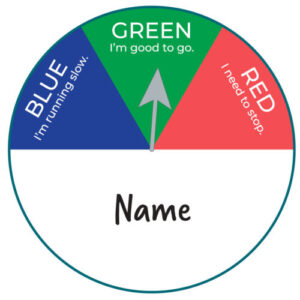
“She’s a caring, gentle soul,” Cindy said. “I’m grateful I had the opportunity to be with her when she needed support the most.”
Research from Harvard University’s Center on the Developing Child shows that a relationship with at least one stable, committed adult in their lives can help children who experience ACEs develop resilience and thrive. Advocates, like Cindy, remain by a child’s side throughout their case, often the only consistent adult during their time in care. Kylie’s story is a testament to the power of presence and the impact of compassionate care on a child’s life.
*Names changed for privacy