
Advocate Access
Get In Touch


News
April 2026 Advocate Spotlight: Mark Fincher & Madge Hollinger
 We invite you to meet Mark Fincher and Madge Hollinger. Both Mark and Madge recently celebrated 10-years of volunteering for Child Advocates, and we honored them at our 2026 Volunteer Appreciation Event in April. At the event, President & CEO Ann Marie Ronsman reflected on the incredible impact they’ve had on children and families in our community.
“Mark’s calm presence, thoughtful advocacy, and steady leadership have made him a trusted voice in the courtroom and a source of stability for the children he serves,” Ann Marie said. “Madge’s advocacy is marked by deep compassion, persistence, and a fierce belief in the potential of every child.”
With a decade of experience each, we asked Madge and Mark to share about their advocacy efforts for children in foster care in Montgomery County.
When you think back to your first year as an Advocate, what stands out to you the most—how has advocacy evolved over the past 10 years?
Madge: When I think about my very first case, the biggest thing that was important was just being a constant in the family’s life and the little one’s life. She was eventually adopted by a relative. I have stayed in touch with the child and her mom. I think she would say that was the most important thing I did as an Advocate. She knew that I was always available to talk, and I checked in with her constantly. If she were struggling, she knew I was available to support her. I have seen advocacy evolve—there’s more of a partnership with the caseworkers, judges, attorneys, family, and the Advocate. Everyone’s on the same team and working to do what’s best for the child.
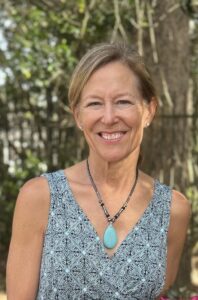
Mark: Given that I have been primarily on child welfare cases, I haven’t seen a big difference. We’ve expanded our footprint to include truancy and justice-involved youth and TBRI® training. We have a few more tools in the toolkit, but primarily you’re doing the same thing as an Advocate that you were doing 10 years ago. You’re building relationships with the kids in the cases. You’re there with them and for them—that’s stayed the same. The more cases you have, the more comfortable you feel doing it. After 10 years, you kind of know what you need to do and it’s not that complicated. It’s a matter of being present.
How has your role as an Advocate changed, and what has that taught you about showing up for children and families?
Madge: All the different tools we have now—TBRI® and CFE—have aided me. I use CFE (Collaborative Family Engagement) on all my cases, and TBRI® (Trust-Based Relational Intervention®) is a constant thought when I’m working with any child. Through our training classes and tools, I’ve learned how important it is for children to remain connected to their families. When I first started, I just wanted the child to be safe, but now advocacy is focused on how this child is going to grow and be impacted in the future as well. Long-term, it’s best for a child to have a connection with their family if possible, and that connection looks different in every case. I had one case where the kids were placed with a cousin. The home itself was modest, but it met basic safety requirements. More importantly, the children were happy, healthy, and connected with their family.
Mark: It’s crucial. You’ve got to be there for these kids. The kids and families have so much turmoil. I’ve been on cases where caseworkers change quite a bit. I’ve been on cases that have gone on for years. My current case is going on four years. One case lasted six years before he was adopted. I still see him every so often.
What differences have you noticed in the children you serve today compared to when you first began, and how have those changes shaped the way you advocate?
Madge: Again, I see the importance of the family to a child and trying to keep that connection for them.
Mark: Some of the cases have gotten harder, but all my cases have had difficult situations. We have more support within the organization for the families. TBRI® is a great support. One of the moms on my cases got TBRI® coaching. We also have more resources to help and guide us. Individually, you know how to work within the child welfare system and court system because of the support. Now that we have dedicated judges who are trauma-informed and trained in TBRI®, that makes a huge difference in our cases. [Editor’s note: County Court at Law 3, Judge Amy Tucker, is the designated child welfare court, and County Court at Law 6, Judge Scharlene Valdez, is the designated juvenile justice court.] Before that, the court system was a little bit chaotic; the designated courts are so much better. County attorneys are focused on doing what’s right for the child. The overall system in Montgomery County has gotten more focused on doing what’s right for the child.
Because our judges are TBRI® Practitioners, they have had the training to understand the impact of trauma on these kids and families and why you have to handle them differently than a kid who hasn’t experienced trauma. These kids have been through an awful lot. The judges understand that. They understand there’s a body of science behind the behaviors and how to handle these situations.
Ten years is a remarkable commitment—how has being an Advocate impacted you personally, and what have you gained from walking alongside so many children and families?
Madge: Through my advocacy, I have become more aware of how a person’s background affects all areas of their lives. It has helped me to be much more empathetic with everyone in my life, including my own extended family. Through all I have learned, I now strive to help those I love create a safe loving environment for their children without critiquing their every move. This has strengthened relationships and alleviated worry.
What has helped you stay committed and hopeful after a decade of service, and what continues to inspire you to say “yes” to this work year after year?
Madge: Knowing that I have something to offer and making a difference. I take breaks when I need it. I’ve sometimes wondered if there’s something else I should be doing to help kids. But I keep coming back to advocacy because of our impact. I’ve learned so much, and I want to use those skills to serve kids. I want to keep learning—our classes teach me so much. I like being a part of the organization.
Mark: No. 1 these kids need you. There’s no shortage of kids who need an adult who cares about them. I’m a Christian, so there’s no doubt in my mind that this is what I’m supposed to do with my life. This is my job and my life’s work. So I do the best I possibly can for these kids.
What would you like new Advocates to know about the meaning and rewards of staying involved in this work?
Madge: The biggest thing that I’ve learned and that’s resonated with me is that it takes only one adult to make a difference in a kid’s life, and we truly make a difference in each child’s life. I’ve stayed in touch with many of the children and families I’ve served. They send photos, and it’s wonderful. It brings a lot of joy to see the children thriving. It’s also OK to take breaks from volunteering when you need it.
Mark: You make a difference. Even if you think you aren’t making a difference, you are. You’re creating a memory of what a good human being is for this kid. Somewhere down the road, that child will remember you and be glad they had you in their corner.